EV Comparison Sheet

www.greencarplanet.com

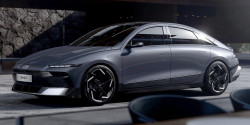
Hyundai Ioniq 6 84 kwh 2025
Nissan Leaf 52kWh

2026
Release
2025
680 km
Range
-
78.4 kWh usable, 84 kWh total
Battery
52.9 kWh total
Rear-wheel drive 168 kW (229 hp)
Power
Front-wheel drive 130 kW (177 hp)
7.4 sec 0-100 km/h
0-100 km/h
-
185 km/h (115 mph)
Top Speed
160 km/h (99 mph)
47000 USD
Price
-
visit: www.greencarplanet.com

Compare Hyundai Ioniq 6 84 kwh 2025 vs Nissan Leaf 52kWh

Making its mark in the electric vehicle market, the Hyundai Ioniq 6 84 kwh 2025 was announced in 2026. It is powered by a 78.4 kWh usable, 84 kWh total battery, delivering an estimated range of 680 km. When it comes to output, this EV produces Rear-wheel drive 168 kW (229 hp), enabling an acceleration of 7.4 sec 0-100 km/h and a top speed of 185 km/h (115 mph). Pricing for the vehicle starts at approximately 47000 USD.

Meanwhile, the Nissan Leaf 52kWh was officially introduced in 2025. It is powered by a 52.9 kWh total battery. When it comes to output, this EV produces Front-wheel drive 130 kW (177 hp), pushing the car to a top speed of 160 km/h (99 mph).

Hyundai Ioniq 6 84 kwh 2025
Remove
Nissan Leaf 52kWh
Remove
  Hyundai Ioniq 6 84 kwh 2025 Nissan Leaf 52kWh
Launch
Announced 2026 2025
Release date November 2026 2025
Performance
Power Rear-wheel drive 168 kW (229 hp) Front-wheel drive 130 kW (177 hp)
Torque 350 Nm (258 lb-ft) 345 Nm (254 lb-ft)
Acceleration 7.4 sec 0-100 km/h -
Top speed 185 km/h (115 mph) 160 km/h (99 mph)
Battery
Battery capacity 78.4 kWh usable, 84 kWh total 52.9 kWh total
Battery type Liquid-cooled (800V type) Liquid-cooled Li-ion
Driving range 680 km -
Consumption 13.5 kWh/100 km -
Regenerative braking Yes Yes
Heat pump Yes Yes
Home charging Type 2 11 kW Type 2
Charging station CCS 350 kW max, 10-80% in 18 min Type 2
Additional Vehicle to load (V2L) --- 230V electrical outlet (3.6 KW max) Vehicle-to-Home (V2H), Vehicle-to-Grid (V2G), Vehicle-to-Load (V2L)
Body
Doors & seats 4 door sedan, 5 seats 5 door hatchback, 5 seats
Dimensions 4935 x 1880 x 1495 mm (194.3 x 74.0 x 58.9 in) 4350 x 1810 x 1550 mm (171.3 x 71.3 x 61.0 in)
Weight 1925 kg unladen, 2420 kg gross 1794 kg unladen
Wheels size R18, R20 R18, R19
Trunk volume 401 l 437 l
Front trunk 45 l No
Display
Center screen 12.3" touchscreen 12.3" or 14.3" touchscreen
Driver's display 12.3" 12.3" or 14.3"
Head-up display Yes, projector type No
Comfort
Seats Heated and ventilated front seats, heated rear seats Heated front seats, heated outer rear seats
Roof Panoramic glass roof, tilt & slide Panoramic glass sunroof with variable light transmission (Polymer Dispersed Liquid Crystal technology)
Parking aids Front and rear sensors, 360 camera, front and reversing camera, Remote Smart Parking Assist 2 Front and rear sensors, 360 camera, reversing camera, ProPilot autonomous parking
Connectivity Android Auto and Apple CarPlay Android Auto and Apple CarPlay
Safety
Airbags 7 airbags: side, front and rear, including head airbag system Side airbags, front and rear, including head airbag system
Driving aids Front and corner radars, cameras. Highway Driving Assist II, Forward Collision Warning, Autonomous Emergency Braking with Pedestrian and Cyclist Recognition, Blind Spot Collision-Avoidance Assist, Rear Cross-Traffic Collision-Avoidance Assist, Lane Keeping Assist, Safe Exit Assist, High Beam Assist, Intelligent Speed Limit Assist, Driver Attention Warning Front view camera and radar. Blind Spot Warning, Lane Departure Prevention, Lane Departure Warning, Rear Cross Traffic Alert, Driver Attention Alert, Automatic Emergency Braking with Pedestrian Detection, Intelligent Around View Monitor, High Beam Assist
Misc
Price 47000 USD -

Frequently Asked Questions: Hyundai Ioniq 6 84 kwh 2025 vs Nissan Leaf 52kWh

The Hyundai Ioniq 6 84 kwh 2025 is equipped with a 78.4 kWh usable, 84 kWh total battery pack, whereas the Nissan Leaf 52kWh comes with a 52.9 kWh total.